
Heat, humidity, and poor air quality can make asthma symptoms worse. Planning ahead and taking simple precautions can help you stay comfortable and reduce your risk of an asthma flare.
Why Weather Matters
Hot temperatures, high humidity, smoke, pollen, and air pollution can irritate your airways and make breathing more difficult.
Good to know: Older adults often have a harder time sensing when their body is overheating. That means both heat stress and asthma symptoms can build up gradually, before you notice something is wrong. Checking conditions ahead of time — rather than waiting to feel it — is your best defense.
Common environmental triggers include:
- High heat and high heat index (heat plus humidity)
- High humidity
- Wildfire smoke
- Ozone pollution
- Dust
- Pollen
- Mold
- Strong odors, fumes, or cleaning products
Knowing your personal triggers can help you prepare and avoid unnecessary symptoms.
Understanding the Air Quality Index (AQI)
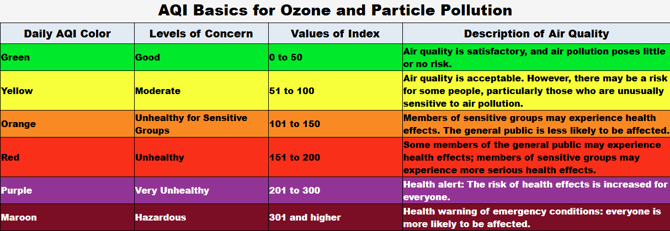
The AQI is a simple number that tells you how clean or polluted the outdoor air is. You can check it daily, free, at AirNow.gov or through most weather apps — just enter your zip code.
Below is the Air Quality Index Table from AirNow.gov:
Watch the Air Quality Before You Head Out
On days with poor air quality:
- Limit outdoor activities, especially in the afternoon when ozone levels are often highest.
- Stay indoors with windows and doors closed when possible.
- Run air conditioning if you have it.
- Use HVAC filtration or a portable HEPA air purifier if recommended by your provider.
- Shower and change clothes after spending time outside if pollen or mold counts are high, to rinse off residual allergens.
Stay Cool During Hot Weather
Heat places extra stress on your lungs, heart, and whole body — and that stress adds up faster with age.
- Stay indoors during the hottest part of the day, typically 10 a.m. to 4 p.m.
- Spend time in air-conditioned spaces whenever possible.
- A fan alone will not reliably protect you once temperatures climb into the mid-90s (°F) or higher — pair it with air conditioning or a cool space rather than relying on a fan by itself.
- If you don't have reliable air conditioning at home, consider a library, mall, senior center, or a community cooling center. Call 211 or your local Area Agency on Aging to find one nearby.
- Wear lightweight, loose-fitting clothing, and a wide-brimmed hat if you go outside.
- Rest frequently, and stop an activity if you feel overheated, dizzy, or unusually tired.
- Check in on neighbors, friends, or family during heat waves — and arrange for someone to check on you, too.
Stay Well Hydrated
Drinking enough fluids helps keep mucus thinner and easier to clear from your airways.
- Sip water regularly throughout the day, on a schedule — don't wait until you feel thirsty. Thirst sensation naturally decreases with age, so you can become dehydrated before you notice it.
- Increase fluids during hot weather unless your healthcare provider has told you to limit them (common with some heart or kidney conditions).
- Limit sugary drinks and alcohol, which can contribute to dehydration.
- Especially if you're on a fluid restriction, make sure to consult with your healthcare provider for specific hydration recommendations
Plan Outdoor Activities Carefully
If you enjoy outdoor activities, like walking, gardening, or exercising:
- Choose early morning or evening, when temperatures are cooler.
- Take frequent breaks, and pace yourself — don't "push through" symptoms
- Avoid strenuous activity during periods of poor air quality or extreme heat.
- Move activities indoors when conditions are unfavorable.
- Avoid tasks that tend to trigger your symptoms, such as mowing the lawn or gardening on high-pollen or high-ozone days.
- If you're heading out alone, bring your phone and let someone know your plans.
Protect Yourself When Air Quality Is Poor
- Keep windows and doors closed on smoky or high-pollution days.
- If you must go outside during wildfire smoke or heavy pollution, a well-fitted N95 or KN95 mask can filter fine particles; cloth and surgical masks do not filter smoke effectively.
- If wearing a mask makes breathing feel harder, don't push through it — stay inside instead and postpone the errand.
Reduce Indoor Triggers
Your indoor environment affects asthma symptoms too.
- Avoid cigarette smoke and secondhand smoke.
- Reduce exposure to strong perfumes, cleaning products, and aerosol sprays.
- Use a vacuum with a double-thickness bag and a HEPA filtration system.
- Change air filters as recommended.
- Control indoor humidity to help reduce mold growth (ideally between 30–50%).
Take Medications as Prescribed
Continue taking your asthma medications exactly as directed by your healthcare provider. Do not stop or change medications without speaking with them first.
- Refill prescriptions before they run out — don't wait for a heat wave or smoke event to discover you're low.
- Carry your quick-relief (rescue) inhaler with you whenever you leave home, if prescribed.
- Store inhalers at room temperature. Never leave one in a hot car or in direct sun — high heat can reduce how well the medication works and, rarely, cause the canister to leak.
- If arthritis, tremor, or vision changes make your inhaler harder to use, ask your provider or pharmacist about a spacer device or a technique review — proper technique matters as much as the medication itself.
- Tell your provider about every medication and supplement you take. Certain blood pressure drugs and pain relievers (such as NSAIDs or aspirin) can interact with asthma treatment.
- Review your written asthma action plan regularly, if you have one.
Know Your Asthma Symptoms
Common asthma symptoms include:
- Wheezing
- Coughing
- Shortness of breath
- Chest tightness
- Difficulty taking a deep breath
- Waking at night because of breathing problems
If you notice symptoms increasing, take action early according to your healthcare provider's recommendations.
Build a Support Network
Heat waves and smoky days are easier — and safer — to get through when someone is checking in on you. Let a family member, friend, or neighbor know how you're feeling, and agree to check in with each other during extreme weather. It's also worth keeping a written list of your medications, emergency contacts, and asthma action plan somewhere easy to find, in case you need help quickly.
Create an Asthma-Friendly Routine
Simple daily habits can help reduce flare-ups:
✔ Check the weather and air quality before going outside.
✔ Stay physically active within your comfort level.
✔ Keep vaccinations up to date — ask your provider about influenza, pneumococcal, and COVID-19 vaccines, and, the shingles vaccine and a Tdap (whooping cough) booster. Respiratory infections can trigger asthma flares.
✔ Avoid tobacco smoke.
✔ Keep regular medical appointments.
When to Contact Your Healthcare Provider
Call your healthcare provider if you:
- Need your rescue inhaler more often than usual.
- Have asthma symptoms that are becoming more frequent or more severe.
- Wake up at night because of coughing
- Notice a decreased ability to perform your normal daily activities.
- Think your medications are no longer controlling your symptoms.
- Notice any new or worsening symptoms
- Have questions about your asthma action plan.
Early treatment may help prevent a more serious asthma flare.
Always ask your healthcare provider for specific advice on when to call to report symptoms, and when to seek urgent or emergency care.
When to Seek Emergency Medical Care
Call 911 or go to the nearest emergency department immediately if you experience:
- Shortness of breath or difficulty breathing
- Trouble speaking in full sentences because of breathlessness
- Blue or gray lips, face, or fingernails
- Chest tightness that does not improve after using your prescribed rescue medication
- Rapid worsening of symptoms
- Confusion, extreme fatigue, or difficulty staying awake
- Signs of heat stroke (described above)
- New chest pain, pressure, or fainting
- Symptoms that continue to worsen despite following your healthcare provider's asthma action plan
These may be signs of a serious asthma attack, heat emergency, or heart problem that requires immediate medical attention.
Key Takeaways
✔ Hot weather, humidity, and poor air quality can worsen asthma symptoms — and the effects can build up faster after age 60.
✔ Check the AQI and weather before spending time outdoors, and know that "unhealthy for sensitive groups" means you.
✔ Stay cool, hydrate on a schedule, and avoid known triggers whenever possible.
✔ Continue taking prescribed medications, store inhalers away from heat, and keep your rescue inhaler readily available if prescribed.
✔ Know when to contact your healthcare provider and when to seek emergency care.
Helpful Resources
- AirNow.gov — free, daily air quality forecasts by zip code
- 211 or your local Area Agency on Aging — find cooling centers and heat-relief programs near you
- Eldercare Locator, 1-800-677-1116 — connects older adults with local services and support
- Your healthcare provider — for a personalized, written asthma action plan
⚠️ Medical Disclaimer
This resource is provided for educational and informational purposes only and is not intended to replace professional medical advice, diagnosis, or treatment. The information presented is general in nature and may not apply to every individual or health situation.
Individuals should consult their physician or other qualified healthcare professional for personalized medical advice, diagnosis, or treatment recommendations related to their specific health conditions and should not begin any new exercise program or change their diet or medications without consulting their healthcare professional.
Call 911 if you are experiencing a medical emergency.
Sources:
UpToDate — Trigger avoidance in asthma (Beyond the Basics)
CDC — Extreme Heat and Your Health (cdc.gov/extreme-heat)
EPA — Air Quality Index Basics (airnow.gov)
GINA — Global Strategy for Asthma Management and Prevention
AirNow.gov