
Heart failure, sometimes called congestive heart failure (CHF), is a chronic condition in which the heart cannot pump blood as effectively as it should. Although heart failure cannot usually be cured, many people are able to manage their symptoms and maintain a good quality of life with medications, healthy lifestyle habits, and regular medical care.
Learning to recognize changes in your symptoms can help you seek treatment early and avoid hospitalizations.
How Does Heart Failure Affect the Body?
Your heart is responsible for pumping oxygen-rich blood throughout your body. When the heart cannot pump efficiently:
- Fluid may build up in your lungs, legs, feet, or abdomen.
- Your body may not receive enough oxygen-rich blood to meet its needs.
- Everyday activities may become more tiring.
Heart failure usually develops gradually and often requires lifelong management.
Common Signs and Symptoms
Symptoms may vary from person to person and can change over time.
Common symptoms include:
- Shortness of breath during activity
- Shortness of breath when lying flat
- Waking up at night feeling short of breath
- Swelling of the feet, ankles, legs, or abdomen
- Rapid or unexplained weight gain
- Feeling unusually tired or weak
- Reduced ability to exercise or complete daily activities
- Persistent cough, especially when lying down
- Loss of appetite or feeling full quickly
- Increased need to urinate at night
Report new or worsening symptoms to your healthcare provider.
Common Causes of Heart Failure
Heart failure can develop for many reasons, including:
- Coronary artery disease
- Previous heart attack
- High blood pressure
- Diabetes
- Heart valve disease
- Irregular heart rhythms
- Certain heart muscle disorders
Managing these conditions can help reduce complications.
Daily Habits That Help Manage Heart Failure
Take Your Medications as Prescribed
Heart failure medications help your heart work more efficiently and reduce symptoms.
Always:
- Take medications exactly as prescribed.
- Refill prescriptions before they run out.
- Never stop a medication without talking to your healthcare provider.
Monitor Your Weight Every Day
Sudden weight gain may be one of the earliest signs that your body is retaining fluid.
Helpful tips:
- Weigh yourself every morning after using the bathroom and before eating.
- Wear similar clothing each time.
- Use the same scale whenever possible.
- Record your weight in a log.
Ask your healthcare provider how much weight gain should prompt you to call the office. Many providers recommend reporting a gain of 2 or more pounds in one day or 4 or more pounds in one week, but your individual plan may be different.
Follow Your Sodium (Salt) Recommendations
Eating too much sodium can cause your body to retain fluid.
Helpful tips:
- Choose fresh foods more often than processed foods.
- Read Nutrition Facts labels.
- Limit canned soups, processed meats, frozen meals, and salty snacks.
- Flavor foods with herbs, garlic, lemon, or spices instead of salt.
Ask your healthcare provider or registered dietitian how much sodium is appropriate for your individual health needs.
Follow Your Fluid Recommendations
Some people with heart failure may need to limit the amount of fluid they drink each day.
Do not begin restricting fluids on your own. Ask your healthcare provider whether you should limit fluids and how much is appropriate for you.
Stay Physically Active
Regular physical activity may improve strength, endurance, and quality of life.
Activities may include:
- Walking
- Chair exercises
- Light stretching
- Cardiac rehabilitation, if recommended
Before starting a new exercise program or increasing your activity level, ask your healthcare provider what types and amounts of exercise are safe for you.
Eat a Heart-Healthy Diet
Focus on foods such as:
- Vegetables
- Fruits
- Whole grains
- Lean proteins
- Beans
- Fish
- Healthy fats such as olive oil
Limit:
- Highly processed foods
- Fried foods
- Sugary beverages
- Foods high in saturated fat
Before making significant dietary changes, consult your healthcare provider or a registered dietitian.
Don't Smoke
Smoking places extra stress on your heart and lungs.
If you smoke, talk with your healthcare provider about resources to help you quit.
Limit Alcohol
Alcohol may worsen heart failure in some people and may interact with medications.
Ask your healthcare provider whether alcohol is safe for you.
Keep Track of Your Symptoms
Many people find it helpful to record:
- Daily weight
- Swelling
- Shortness of breath
- Blood pressure (if recommended)
- Heart rate (if recommended)
- Medication changes
- New symptoms
Tracking changes can help identify problems early.
Check out this printable Self-Check Plan from the American Heart Association:
Stay Up to Date on Vaccinations
Respiratory infections can place extra stress on the heart.
Talk with your healthcare provider about recommended vaccines, including:
- Influenza (flu)
- COVID-19
- Pneumococcal vaccines
- RSV vaccine, if appropriate
When to Call Your Healthcare Provider
Contact your healthcare provider promptly if you:
- Notice increased swelling in your feet, ankles, legs, or abdomen
- Gain weight quickly or more than your provider's recommended amount
- Become more short of breath than usual
- Need extra pillows to sleep comfortably
- Wake up short of breath during the night
- Feel unusually tired or weak
- Have a persistent cough that is getting worse
- Notice decreased appetite or early fullness
- Have questions about your medications or treatment plan
Early treatment of worsening symptoms may help prevent hospitalization.
Always ask your healthcare provider for specific advice on when to call to report symptoms, and when to seek urgent/emergency care.
When to Seek Emergency Medical Care
Call 911 or go to the nearest emergency department immediately if you experience:
- Severe difficulty breathing
- Chest pain or pressure
- Fainting or loss of consciousness
- New confusion or difficulty staying awake
- Blue or gray lips, face, or fingernails
- Coughing up pink, frothy mucus
- Symptoms that rapidly worsen despite following your treatment plan
These may be signs of a medical emergency.
Living Well with Heart Failure
Heart failure is a lifelong condition, but many people successfully manage it for years.
The keys to staying healthy include:
✓ Taking medications consistently
✓ Monitoring your weight and symptoms
✓ Following your healthcare provider's recommendations
✓ Eating a heart-healthy diet
✓ Staying as active as your healthcare provider recommends
✓ Keeping regular follow-up appointments
Small daily habits can make a meaningful difference in managing heart failure and maintaining your quality of life.
Medical Disclaimer
This resource is provided for educational and informational purposes only and is not intended to replace professional medical advice, diagnosis, or treatment. The information presented is general in nature and may not apply to every individual or health situation.
Individuals should consult their physician or other qualified healthcare professional for personalized medical advice, diagnosis, or treatment recommendations related to their specific health conditions and should not begin any new exercise program or change their diet or medications without consulting their healthcare professional.
Call 911 if you are experiencing a medical emergency.
Sources:
- https://www.uptodate.com/contents/heart-failure-action-plan-the-basics?search=congestive%20heart%20failure&topicRef=113235&source=see_link&searchCorrelationId=3d528fbf-26a5-4356-a805-757dc8e1a59e&searchCorrelationTerm=congestive%20heart%20failure
- https://www.uptodate.com/contents/heart-failure-in-adults-the-basics?search=congestive%20heart%20failure&topicRef=113235&source=see_link&searchCorrelationId=3d528fbf-26a5-4356-a805-757dc8e1a59e&searchCorrelationTerm=congestive%20heart%20failure
- https://www.uptodate.com/contents/clinical-manifestations-and-diagnosis-of-advanced-heart-failure?search=congestive%20heart%20failure&source=search_result&selectedTitle=1~150&usage_type=default&display_rank=1&searchCorrelationId=3d528fbf-26a5-4356-a805-757dc8e1a59e&searchCorrelationTerm=congestive%20heart%20failure#H2524422645
- https://www.heart.org/-/media/Files/Health-Topics/Heart-Failure/HF-Symptom-Tracker.pdf
- https://www.heart.org/en/health-topics/heart-failure/warning-signs-of-heart-failure
Heart Failure Daily Weight & Symptom Log
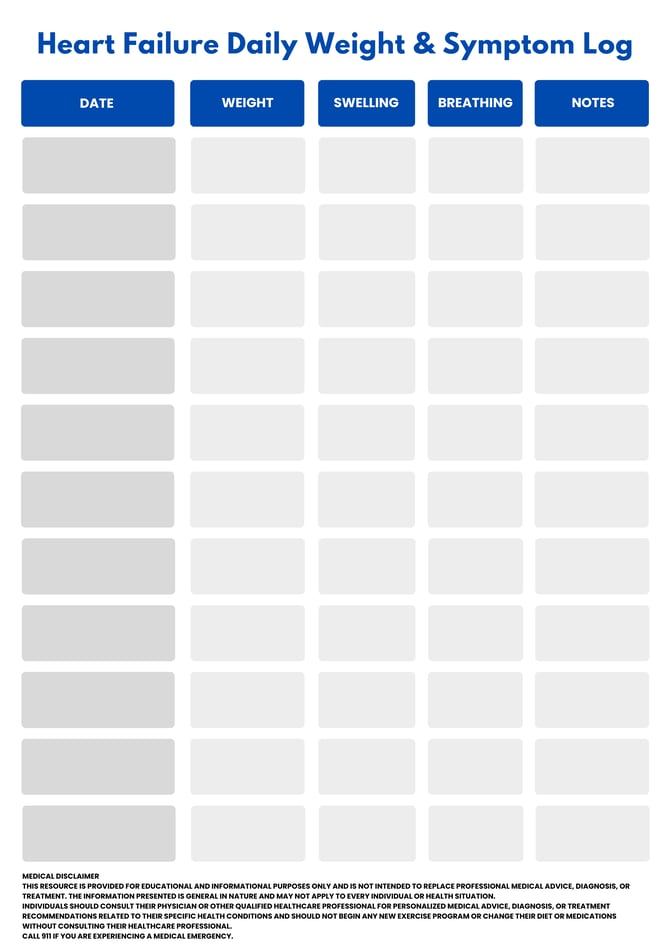
Here is a printable daily weight and symptom log. Remember, always ask your healthcare provider for specific advice on when to call to report symptoms, and when to seek urgent/emergency care.